
10 Healthy Lifestyle Habits to Start Today
A few years ago, I noticed something frustrating: I could have a “healthy” week and still feel like I was making no real progress.
I would exercise for a few days, eat a salad, drink plenty of water, and then suddenly find myself sitting for hours, sleeping late, skipping breakfast, and ordering takeout because I was too tired to cook. The problem wasn’t that I didn’t know what healthy habits were. I was simply trying to change too many things at once.
What finally helped was making small changes that were easy enough to repeat—even on busy days.
That’s the thing about a healthy lifestyle: it doesn’t have to mean completely changing your life overnight. A few simple habits, practiced consistently, can make your days feel better and give you a stronger foundation for long-term health.
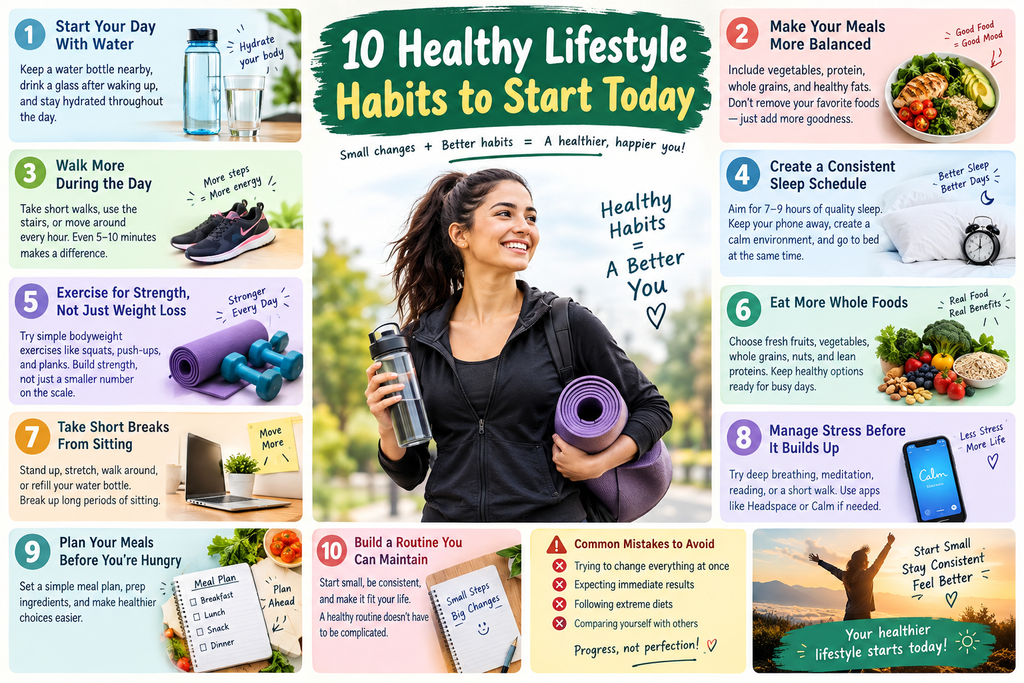
Here are 10 healthy lifestyle habits you can start today.
1. Start Your Day With Water
One of the easiest habits to build is drinking water regularly throughout the day.
I used to reach for coffee first thing in the morning and sometimes wouldn’t drink much water until several hours later. Once I started keeping a water bottle beside my bed, it became much easier to remember.
You don’t need an elaborate routine. Simply make hydration part of your existing routine.
Try this:
- Keep a reusable water bottle nearby.
- Drink a glass of water after waking up.
- Take your bottle with you when leaving home.
- Drink water regularly rather than waiting until you’re extremely thirsty.
- Drink more when you’re exercising or spending time in hot weather.
Your fluid needs can vary depending on your body, activity level, weather, and other factors, so there’s no need to force yourself to drink an excessive amount.
Simple trick: Set a few reminders on your phone if you regularly forget to drink.
2. Make Your Meals More Balanced
Healthy eating doesn’t mean surviving on salads or completely eliminating your favorite foods.
One mistake I made was trying to make every meal “perfect.” That approach didn’t last very long. A much easier strategy was to look at what was already on my plate and add something nutritious.
For example, instead of having a meal that was mostly rice or bread, I started adding vegetables and a protein source.
A simple balanced plate can include:
- Vegetables or fruit
- A source of protein such as eggs, beans, lentils, fish, chicken, yogurt, or tofu
- Whole grains or other carbohydrate sources
- A moderate amount of healthy fats
You don’t have to completely avoid foods you enjoy. Eating patterns are easier to maintain when they allow some flexibility.
A useful rule
Before dramatically changing your diet, ask:
“What healthy food can I add to this meal?”
That question is often more practical than asking yourself what you need to remove.
3. Walk More During the Day
You don’t need to spend an hour at the gym every day to become more active.
Walking is one of the simplest ways to add movement to your routine.
When I started paying attention to how much I moved during the day, I realized that my biggest problem wasn’t always my workout—it was sitting for long periods afterward.
A short walk after a meal, walking while talking on the phone, or taking the stairs instead of the elevator can all add movement.
Start small:
- Take a 5–10 minute walk.
- Repeat it once or twice during the day.
- Look for opportunities to walk instead of sitting.
- Gradually increase your activity as it becomes comfortable.
A fitness tracker such as a Fitbit, Apple Watch, or Garmin device can help you notice your daily movement, but you don’t need a device to start.
The goal isn’t to obsess over a particular step number. It’s simply to become more active than you were before.
4. Create a Consistent Sleep Schedule
This is one habit I underestimated for a long time.
I used to think I could compensate for poor sleep with coffee the next morning. Sometimes it worked for a few hours, but by the afternoon I felt tired and unmotivated.
A regular sleep schedule can make it easier to get enough rest.
Try this tonight:
- Choose a realistic bedtime.
- Wake up around the same time each day.
- Put your phone away before bed.
- Keep your bedroom comfortable, quiet, and dark.
- Avoid large amounts of caffeine late in the day.
- Give yourself time to relax before sleeping.
Adults generally need around 7–9 hours of sleep per night, although individual needs vary.
If you’re consistently having trouble sleeping despite making changes, it’s worth discussing the issue with a healthcare professional.
5. Exercise for Strength, Not Just Weight Loss
When people talk about exercise, they often focus entirely on losing weight.
But getting stronger is a useful goal on its own.
Strength training can be done at home with bodyweight exercises or simple equipment. Beginners can start with movements such as:
- Squats
- Wall push-ups
- Glute bridges
- Lunges
- Step-ups
- Planks
Start with a manageable amount rather than pushing yourself until you’re exhausted.
For example, you could begin with a short routine three times per week:
Step 1: 5-minute warm-up
Step 2: 8–12 squats
Step 3: 8–12 wall or modified push-ups
Step 4: 10 glute bridges
Step 5: 15–30-second plank
Step 6: Rest and repeat if comfortable
Focus on controlled movements and good form.
If you have an injury, medical condition, or you’re unsure whether a particular exercise is appropriate for you, get professional guidance before starting.
6. Eat More Whole Foods
You don’t have to remove every packaged food from your kitchen.
Instead, try making whole or minimally processed foods a bigger part of your meals.
Some easy options include:
- Oats
- Eggs
- Fresh or frozen vegetables
- Fruits
- Beans and lentils
- Nuts and seeds
- Plain yogurt
- Fish or lean meats
- Whole-grain foods
One lesson I learned was that convenience matters.
If healthy food requires 45 minutes of preparation every time you’re hungry, you’re less likely to choose it when you’re busy.
That’s why I started keeping easy options available. Frozen vegetables, boiled eggs, fruit, yogurt, and pre-prepared ingredients can make healthy eating much easier.
Healthy doesn’t have to mean complicated.
7. Take Short Breaks From Sitting
If you work at a desk, study, or spend a lot of time on your computer, this habit can make a noticeable difference to your daily routine.
Instead of sitting for several uninterrupted hours, make a habit of getting up periodically.
You could:
- Walk around the room.
- Stretch your legs.
- Refill your water bottle.
- Do a few gentle movements.
- Walk while taking a phone call.
I found that using a simple phone or computer reminder worked better for me than relying on memory.
If you use an Apple Watch or Fitbit, activity reminders can also encourage you to move periodically.
These little breaks don’t replace exercise, but they can help break up long periods of sitting.
8. Learn to Manage Stress Before It Builds Up
Stress is part of life. The goal isn’t to eliminate every stressful situation.
The more useful goal is learning how to handle stress before it becomes overwhelming.
For me, one of the simplest strategies was going for a walk without constantly checking my phone. Even 10–15 minutes away from a screen gave me some mental space.
Other people may prefer:
- Deep breathing
- Meditation
- Journaling
- Reading
- Spending time outdoors
- Talking with someone they trust
- Gentle exercise
- Listening to relaxing music
Apps such as Headspace or Calm can also provide guided meditation and relaxation exercises.
You don’t need to meditate for 30 minutes. Starting with five minutes is perfectly reasonable.
If stress is persistent, severe, or interfering with your everyday life, consider speaking with a qualified mental health professional.
9. Plan Your Meals Before You’re Extremely Hungry
This sounds boring, but it can save you from many impulsive food choices.
One of my recurring mistakes was waiting until I was starving before deciding what to eat. At that point, convenience usually won.
Meal planning doesn’t need to mean preparing every meal for an entire week.
You can simply decide:
Breakfast: Eggs + whole-grain toast + fruit
Lunch: Chicken or beans + vegetables + rice
Snack: Yogurt + fruit
Dinner: Fish, lentils, or chicken + vegetables + potatoes or another grain
Having a basic plan means you’re not making every food decision when you’re tired or hungry.
You can also prepare a few ingredients in advance—such as cooked beans, rice, vegetables, or protein—to make meals faster.
10. Build a Routine You Can Actually Maintain
This might be the most important habit of all.
A healthy routine doesn’t have to look impressive on social media.
You don’t need a two-hour morning workout, a complicated supplement routine, or a refrigerator full of expensive “superfoods.”
If a habit is so difficult that you can’t maintain it, it probably needs to be simplified.
For example:
Instead of:
“I’ll exercise for one hour every morning.”
Try:
“I’ll walk for 15 minutes after dinner.”
Instead of:
“I’ll never eat unhealthy food again.”
Try:
“I’ll include a fruit or vegetable with most meals.”
Instead of:
“I’ll completely change my sleep schedule tonight.”
Try:
“I’ll go to bed 20–30 minutes earlier this week.”
Small changes may not feel exciting at first, but they’re much easier to repeat.
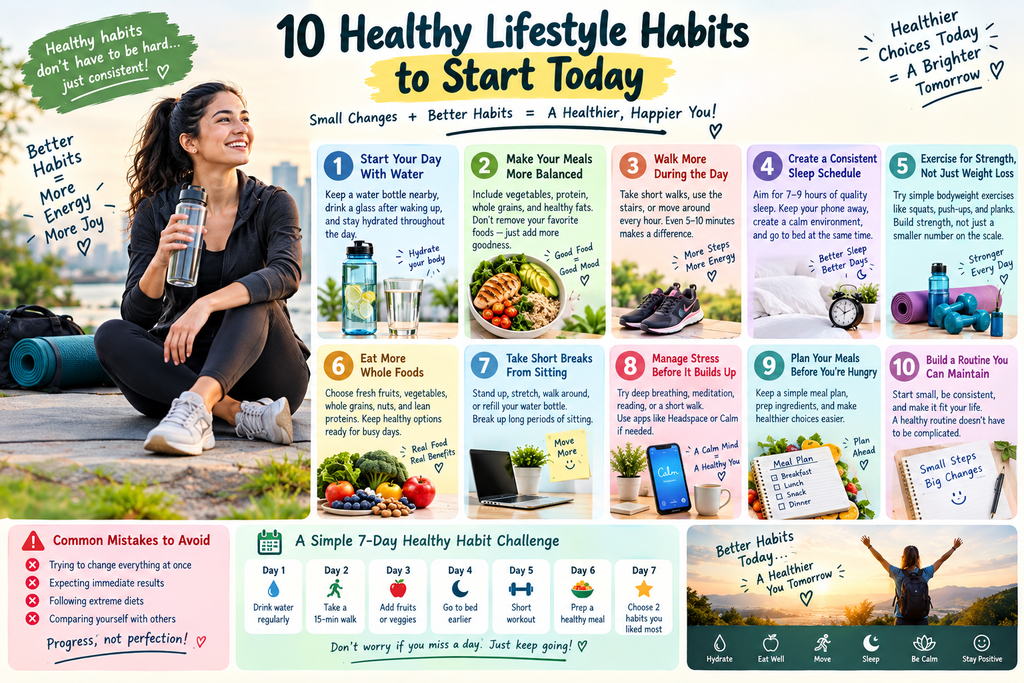
Common Healthy Lifestyle Mistakes to Avoid
Starting healthy habits is great, but there are a few traps that can make the process unnecessarily difficult.
Trying to change everything at once
You might decide to exercise every day, completely change your diet, sleep eight hours, drink more water, meditate, and quit every unhealthy food—all on Monday.
By Friday, you’re exhausted.
Pick one or two habits first. Once they become routine, add another.
Expecting immediate results
Your body doesn’t change dramatically because you had three healthy meals and exercised twice.
Give yourself time.
Pay attention to things beyond the scale, such as your energy, strength, sleep routine, daily activity, and how consistently you’re following your habits.
Following extreme diets
Very restrictive diets may sound appealing because they promise fast results, but they can be difficult to maintain and may not provide balanced nutrition.
A sustainable eating pattern is usually more useful than constantly jumping between extreme plans.
Comparing yourself with other people
Someone else’s fitness journey isn’t your measuring stick.
Your starting point, schedule, preferences, and circumstances are different.
Focus on becoming healthier compared with where you started.
A Simple 7-Day Healthy Habit Challenge
If you’re not sure where to begin, try this simple approach.
Day 1: Drink water regularly throughout the day.
Day 2: Take a 15-minute walk.
Day 3: Add vegetables or fruit to another meal.
Day 4: Go to bed a little earlier.
Day 5: Complete a short beginner strength workout.
Day 6: Prepare one healthy meal in advance.
Day 7: Review the week and choose the two habits you enjoyed most.
Don’t worry if you miss a day.
Simply continue the next day.
That’s another lesson that took me a while to learn: missing one healthy habit doesn’t mean you’ve failed. The real problem is letting one missed day turn into several weeks.
Make Healthy Choices Easier
Your environment has a bigger effect on your habits than you might expect.
If fruit is sitting on the kitchen counter and cookies are hidden in a cupboard, you’re more likely to notice the fruit first.
If your walking shoes are beside the door, going for a walk feels easier.
If your water bottle is on your desk, you’re more likely to drink from it.
So instead of relying entirely on motivation, make the healthier choice convenient.
Put your workout clothes somewhere visible. Keep nutritious snacks available. Prepare simple meals ahead of time. Set reminders for important routines.
The goal is to create a lifestyle where healthy choices require less effort.
Start With One Change Today
You don’t need to wait for Monday, the beginning of a new month, or a new year.
Choose one habit from this list and make it ridiculously simple.
Drink a glass of water.
Take a short walk.
Add vegetables to dinner.
Go to bed a little earlier.
Do five minutes of exercise.
Then repeat it tomorrow.
Over time, those small actions can become part of your normal routine. And once a healthy habit feels normal rather than difficult, adding another one becomes much easier.
The best lifestyle isn’t the one that looks perfect on paper. It’s the one you can realistically keep doing when work gets busy, plans change, and motivation disappears.
Start small, stay consistent, and give yourself room to be human.