
I still remember how frustrating it can feel when your clothes fit everywhere except around your waist. You might be eating “pretty healthy,” walking regularly, and even doing a few abdominal exercises, yet that stubborn belly seems to stick around.
One of the biggest mistakes people make is expecting belly fat to disappear from hundreds of crunches or one special drink. I’ve seen this approach lead to plenty of frustration. People work their abs every day, cut out entire food groups, or try extreme diets, only to give up because the results don’t come quickly enough.
The better approach is much less dramatic: make a few habits easier to follow and stick with them.
You can’t choose exactly where your body loses fat first. As your overall body fat decreases, your waist may gradually become smaller too. Genetics, age, hormones, sleep, activity level, and eating habits can all influence how your body stores and loses fat.
If you’re trying to lose belly fat naturally, these ten practical tips are a good place to start.
1. Start With Your Overall Eating Habits
You don’t need to completely change your diet overnight.
A simple first step is to look at what you normally eat for a few days. Don’t try to be perfect. Just pay attention.
Are you drinking sugary beverages every day? Are your portions much larger than you realize? Do you regularly snack while watching television? Are most of your meals based around highly processed foods?
These small observations can reveal more than jumping straight into a restrictive diet.
Try building most meals around:
- Vegetables and fruit
- Protein-rich foods
- Whole grains or other high-fiber carbohydrates
- Healthy sources of fat
- Water or unsweetened drinks
For example, instead of having a large portion of white rice with a small amount of protein, you could add vegetables and a reasonable serving of chicken, fish, beans, eggs, or another protein source.
The goal isn’t to eat as little as possible. It’s to make your normal meals more filling and nutritious.
2. Get More Protein in Your Meals
Protein can be especially useful when you’re trying to lose body fat because it helps make meals more satisfying and supports muscle maintenance.
You don’t necessarily need expensive protein powders or supplements.
Simple foods can work well:
- Eggs
- Chicken
- Fish
- Greek yogurt
- Milk
- Beans
- Lentils
- Cottage cheese
- Tofu
- Lean meat
A practical habit is to include a protein source whenever you eat a main meal.
For breakfast, that might mean eggs and whole-grain toast. Lunch could be chicken with vegetables and rice. Dinner might be lentils, fish, or beans with a balanced side dish.
One mistake I often see is treating protein as something that only belongs in a post-workout shake. Your meals throughout the day matter too.
3. Cut Back on Sugary Drinks
This is one of the easiest changes for many people.
A few drinks can add a surprising amount of sugar and calories without making you feel particularly full. Soda, sweetened tea, energy drinks, flavored coffees, and some packaged juices can all contribute.
You don’t have to suddenly make every drink plain water if that feels unrealistic.
Start by reducing the amount of added sugar.
For example:
Week 1: Replace one sugary drink with water.
Week 2: Replace another with unsweetened tea or sparkling water.
Week 3: Keep sugary drinks as an occasional choice rather than an everyday habit.
You can also use a reusable water bottle to make drinking water more convenient. A simple bottle with volume markings can help you notice how much you’re drinking throughout the day.
The important thing is consistency, not perfection.
4. Walk More During the Day
You don’t need to spend an hour in a gym every day to become more active.
Walking is underrated.
A short walk after a meal, walking while talking on the phone, taking the stairs, or parking slightly farther away can gradually increase your daily activity.
If you’re currently inactive, don’t worry about immediately hitting a huge step goal.
Start with something manageable.
For example:
Week 1: Add a 10-minute walk each day.
Week 2: Increase it to 15–20 minutes.
Week 3: Add another short walk when your schedule allows.
You can use a smartphone, smartwatch, or fitness tracker to monitor your steps. Apps such as Apple Health, Google Fit, or Fitbit can make your daily movement easier to track.
The number itself isn’t magic. The real benefit is becoming more aware of how much you’re moving.
5. Add Strength Training
If your only exercise is cardio, consider adding some basic strength training.
You don’t need a home gym filled with equipment. Bodyweight exercises can be enough to get started.
A simple beginner routine could include:
- Squats
- Wall push-ups or regular push-ups
- Glute bridges
- Lunges
- Resistance-band rows
- Planks
Start with two or three sessions per week.
For example, you could perform 2–3 sets of each exercise and gradually increase repetitions as the exercises become easier.
Strength training doesn’t specifically burn belly fat. Instead, it helps build and maintain muscle while you’re working toward reducing overall body fat.
Another unexpected benefit is that getting stronger can make everyday activities feel easier. Carrying groceries, climbing stairs, or getting up from a chair may become less tiring.
6. Don’t Depend on Crunches to Lose Belly Fat
This is one of the most common mistakes.
Crunches can strengthen your abdominal muscles, but doing hundreds of them doesn’t mean the fat covering those muscles will disappear.
Think of two separate goals:
Goal 1: Strengthen your core.
Goal 2: Reduce overall body fat.
You can work on both, but they aren’t the same thing.
Planks, dead bugs, bird dogs, and other core exercises can be useful for building core strength. Combine them with walking, strength training, and a balanced eating pattern rather than expecting abdominal exercises alone to flatten your stomach.
If someone tells you that a particular exercise will “melt belly fat” from one specific area, be skeptical.
7. Pay Attention to Portion Sizes
Even nutritious foods can contribute more calories than you need if your portions are consistently very large.
This doesn’t mean you need to weigh every bite of food.
Instead, try a simple plate approach.
Fill a substantial portion of your plate with vegetables, add a good protein source, and include a reasonable serving of carbohydrates and healthy fats.
Eat slowly enough to notice when you’re becoming comfortably full.
Another useful trick is to avoid eating directly from a large package. Put your snack into a bowl or container first. It’s much easier to lose track of how much you’ve eaten when you’re grabbing handful after handful from a bag.
Portion awareness is often more sustainable than banning your favorite foods.
8. Get Serious About Sleep
Sleep is easy to ignore when you’re focused on diet and exercise.
But poor sleep can make healthy habits harder to maintain. When you’re exhausted, cooking a balanced meal may feel like too much work, and high-calorie snacks can become more tempting.
Most adults should aim for around 7–9 hours of sleep per night, although individual needs vary.
Try creating a simple bedtime routine:
- Go to bed around the same time most nights.
- Reduce unnecessary screen time before bed.
- Keep your bedroom comfortable and dark.
- Avoid large amounts of caffeine late in the day.
- Give yourself enough time to wind down.
You don’t need a perfect sleep schedule. Even making your bedtime more consistent can be a useful improvement.
9. Manage Stress in a Practical Way
Stress doesn’t automatically cause belly fat, but chronic stress can make healthy routines more difficult.
Some people eat more when they’re stressed. Others stop exercising, sleep poorly, or rely heavily on convenience foods.
You don’t need complicated stress-management techniques.
Try something simple:
Take a 10-minute walk.
Call a friend.
Spend a few minutes outside.
Do some gentle stretching.
Write down what’s bothering you.
Practice slow breathing.
The best strategy is one you’ll actually use.
If your day is already packed, don’t tell yourself that stress management requires an hour of meditation. Even ten quiet minutes can be a reasonable starting point.
10. Track Progress Beyond the Scale
The scale can be useful, but it shouldn’t be your only measurement.
Body weight naturally changes from day to day because of water, food, sodium, digestion, and other factors.
Instead of worrying about every small fluctuation, look at longer-term trends.
You can track:
- Waist measurement
- Body weight
- Step count
- Workout performance
- How your clothes fit
- Energy levels
- Sleep consistency
Take a waist measurement every few weeks under similar conditions rather than checking it several times a day.
You can also keep a simple food and activity journal. Apps such as MyFitnessPal or Cronometer can help some people understand their food intake, although you don’t have to track calories forever.
For some people, detailed tracking is helpful. For others, it becomes stressful. Choose the method that helps you stay consistent.
A Simple Daily Routine to Get Started
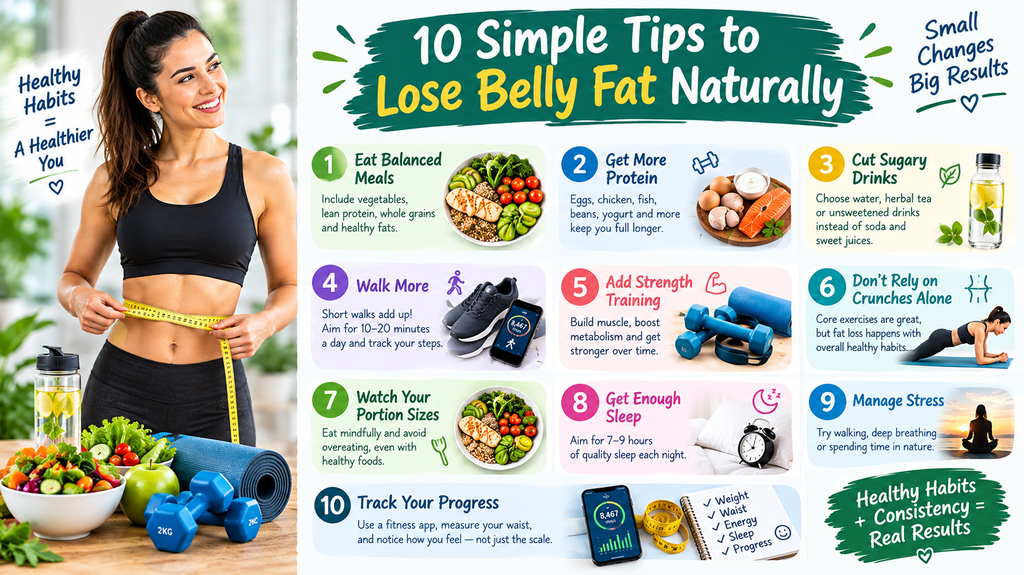
You don’t have to implement all ten tips tomorrow.
Here’s a simple starting routine:
Morning
Drink water and eat a protein-rich breakfast if you enjoy breakfast.
During the day
Choose mostly whole or minimally processed foods, include vegetables and protein in your meals, and keep sugary drinks limited.
After a meal
Take a 10–15 minute walk when your schedule allows.
Exercise
Do strength training two or three times per week and gradually increase your activity.
Evening
Avoid turning late-night snacking into an automatic habit and give yourself enough time to sleep.
That’s it.
It may not sound exciting, but boring habits that you repeat often tend to be more useful than extreme plans that last five days.
Common Mistakes That Can Slow Your Progress
Trying to lose fat too quickly
Very aggressive diets can be difficult to maintain and may leave you feeling tired and constantly hungry.
A slower approach is usually easier to stick with.
Skipping meals to “save calories”
Some people skip breakfast or lunch and then become extremely hungry later. That can make overeating more likely.
Meal timing is personal, but extreme restriction isn’t necessary for everyone.
Buying every “fat-burning” product
Detox drinks, waist-trimming products, special teas, and miracle supplements are often marketed with impressive promises.
Be careful with anything claiming to specifically melt belly fat without requiring changes to diet or activity.
Exercising but ignoring food choices
Exercise is valuable for many reasons, but it’s easy to eat back more calories than you realize.
Think of nutrition and activity as partners rather than competing strategies.
Giving up after one bad day
You ate pizza. You skipped your workout. You had dessert.
That’s not failure.
The mistake is turning one off-plan meal into an entire week of abandoning your habits.
Just return to your normal routine at the next meal or the next day.
What About Belly Fat After Losing Weight?
Sometimes the scale goes down before your waist changes noticeably. Other times, your clothes become looser before the scale moves much.
That’s normal.
Your body doesn’t follow a perfectly predictable schedule.
It’s also worth remembering that some abdominal fat is normal. The goal shouldn’t be to eliminate every bit of fat from your stomach.
Focus on improving your overall health, fitness, strength, eating habits, and waist measurement rather than chasing an unrealistic body shape.
If you have a medical condition, take medications that affect weight, are pregnant, or have a history of disordered eating, it’s a good idea to speak with a qualified healthcare professional before making major diet or exercise changes.
The Best Approach Is the One You Can Repeat
Losing belly fat naturally isn’t about finding one secret exercise, one drink, or one food.
It’s usually the result of several ordinary habits working together: eating balanced meals, getting enough protein and fiber, moving more, strength training, sleeping well, managing stress, and staying consistent.
You may not notice dramatic changes in the first week. That’s okay.
Instead of asking, “How can I lose my belly as fast as possible?” try asking, “What healthy habit can I realistically continue for the next three months?”
That question leads to a much more useful place.
Start with two or three changes. Give yourself time to adapt. Once those habits feel normal, add another.
The goal isn’t to build the perfect routine overnight. It’s to build a routine that still works when life gets busy, you miss a workout, or you enjoy your favorite meal with friends.
That’s the kind of progress that can actually last.